
piezo buffer for impedance match
I've been working at piezo preamps for many years and I always struggled to find a good sounding result.
At the beginning I've been using the knowledge of nucler physics to build custom preamps to improve the signal to noise ratio.
The material I got required complex computation and, even worse, components that are not available on the market any longer. Originally I started working with JFet but they are really hard to find and I had few in stock. I needed a solution which can last longer. I moved to op-amp starting initially with LM387 but I was really unsatisfied with the result.
The big change was not to find the best schematics but better components. The big change was to use NE532 supplied by a step-up with dual voltage from 5V USB.
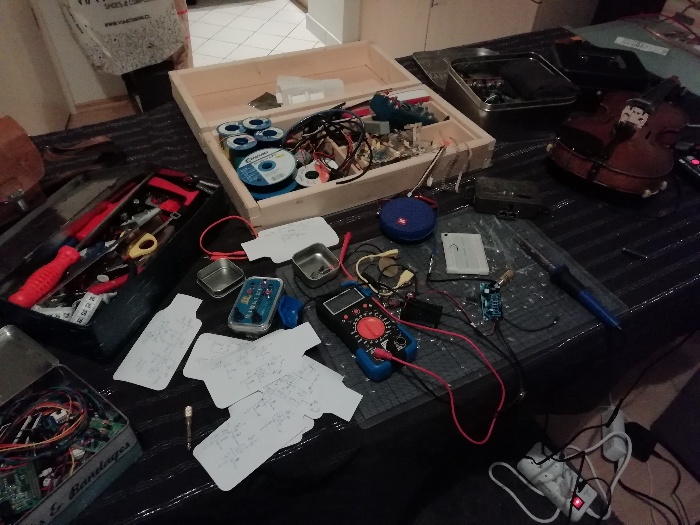
Circuit selection, trials and modifications
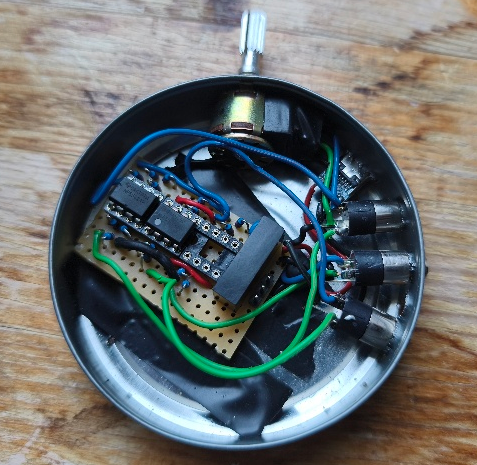
We try every circuit on the protoboard before wiring
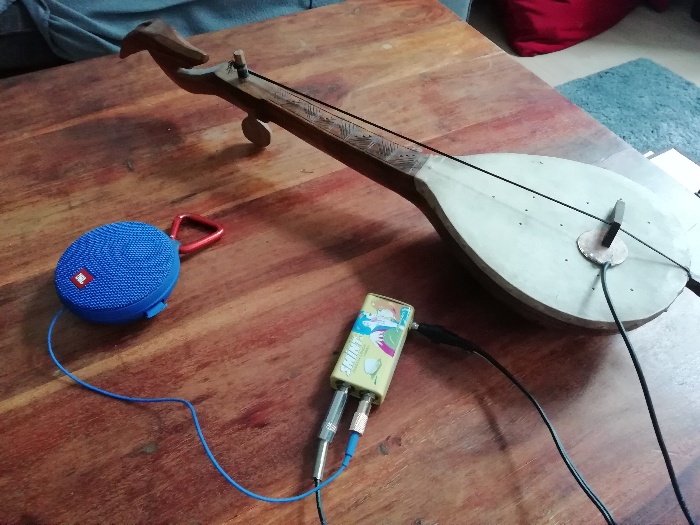
We use small cases to include the buffer, even small loudspeakers have enough sound definition
Impedance match for piezoelectric microphones
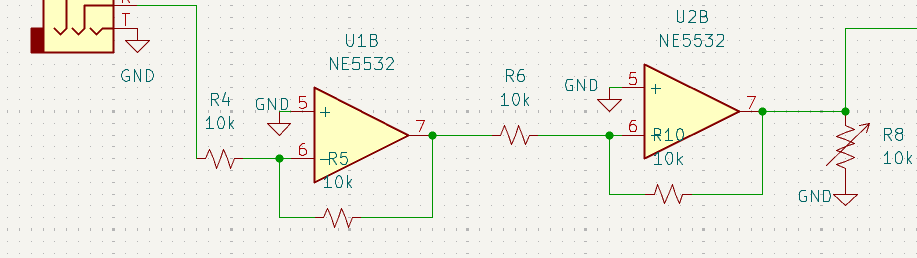
The principle here is a voltage follower, we use a double op amp per channel, both stage on the inverting pin. The feedback loop is 1 since we don't need to amplify but rather decrease the total voltage caused by the piezo.
The KiCad projet here.
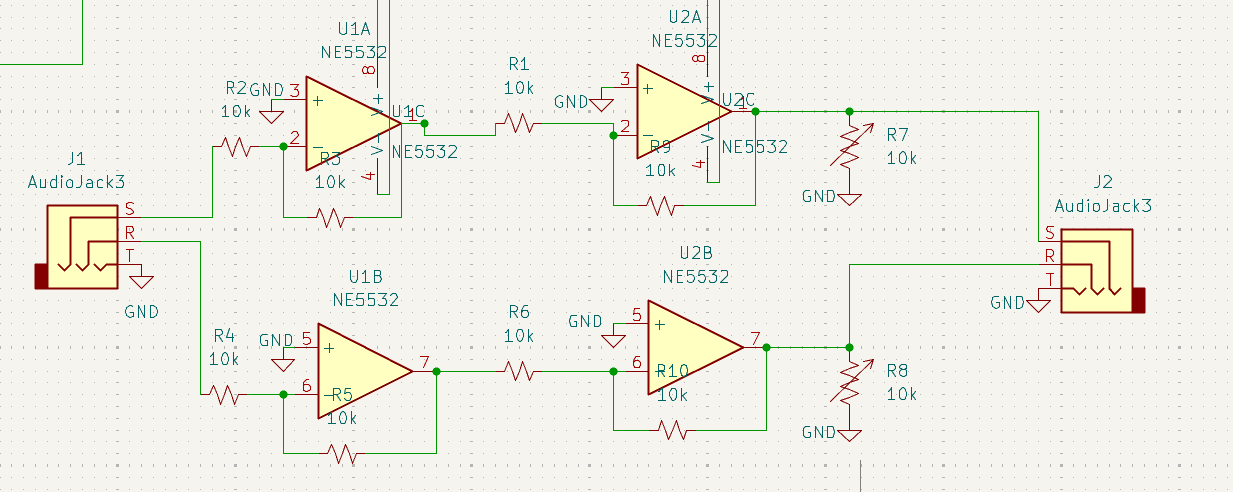
Since most of the violins have two different piezo I use two channels.
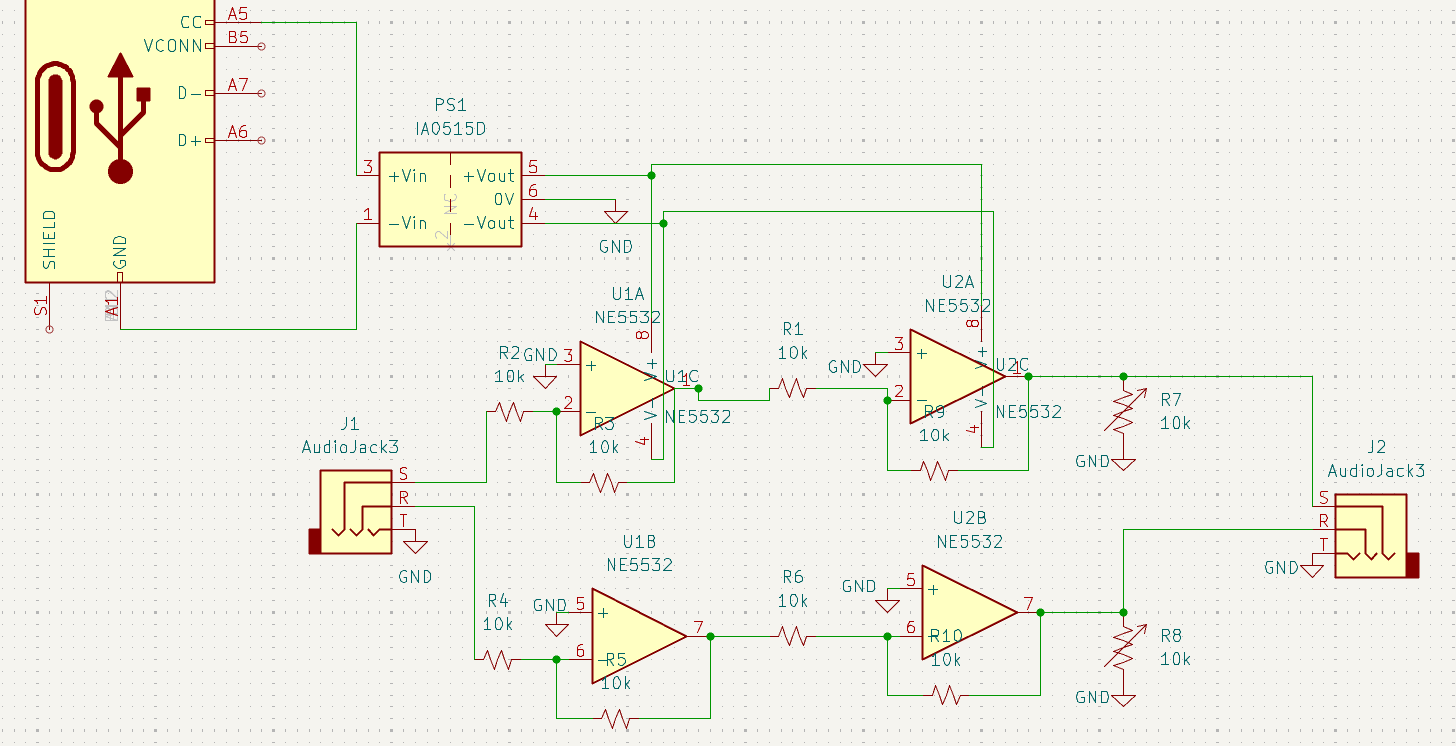
What makes this preamp superior to the others is the step-up. I convert the 5V usb power supply into a double +/- 12V which correctly amplifies the signal. Previously I was using dual power supply (really hard to carry) or 9V batteries with a partitor resistor creating +/- 4V5 creating a lot of nosie.
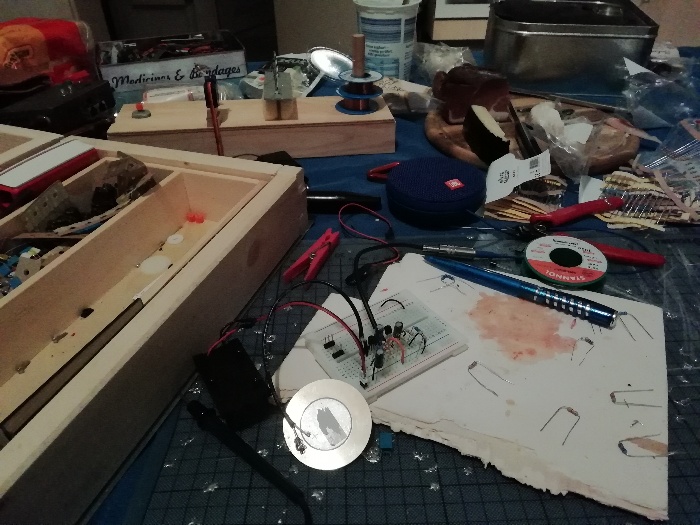
We test all the circuits on the breadboard before soldering the components. We use a simple speaker to test the results.
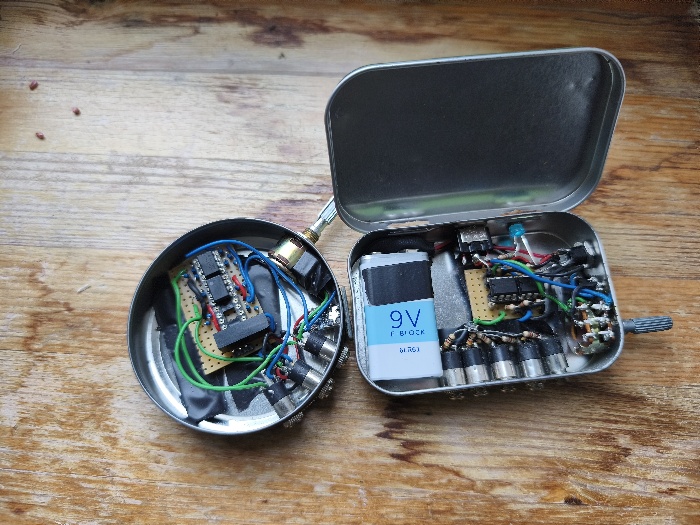
We minimize the circuit size on the board. The bulkiest components are the plugs and the stereo potentiometer. We can add multiple inputs so the buffer acts as a mixer.
We use small aluminium cases for the em isolation
 2015-2023
theme
2015-2023
theme